Why India? Why Not?
People ask me, why India? To that, I say, why not?
I think about designing for BECASA a little like painting. I want all the paintbrushes, all the colors, all the canvas. I want possibility. And India is full of it.
We’ve been home about a week now and I’m still thinking about this trip. This was our second time traveling to India to work, but this time felt different. I think mostly because we know ourselves better. Eight years into BECASA, I know what we do well. I know what our customers actually wear, what you come back for, what you ask us to make again and what feels like us. I also know what doesn’t. So we went back to India with a much clearer idea of BECASA and found what felt like a giant box of paintbrushes waiting for us.
I’ve always believed in making things where they make sense. Our cotton knits are made in California, home to some of the best soft cotton manufacturing in the world, and I’m incredibly proud that those pieces are made right here in the USA. For linen, woven cottons, handwork and a growing world of things for home, we work in India. Different places have different histories, skills and ways of making things beautifully. I don’t think everything has to come from one place. I want to follow the cloth, the craft and the people who know them best.
And in India, there is so much to look at. Cloth stacked to the ceiling, color everywhere, hands cutting, stitching, printing, beading and finishing. Looms, machines and handwork. Old techniques right alongside the new. Making is just part of life there.
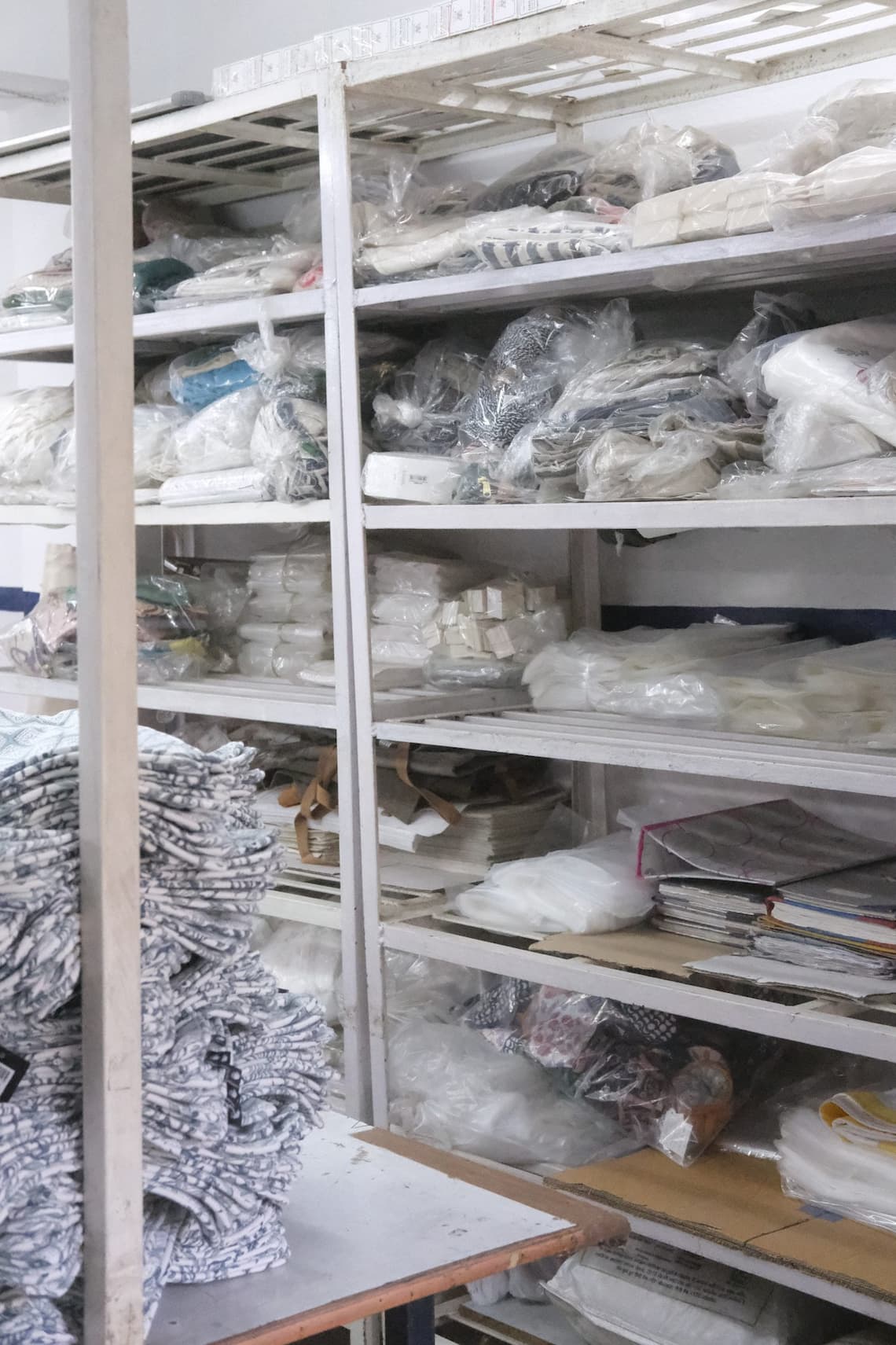
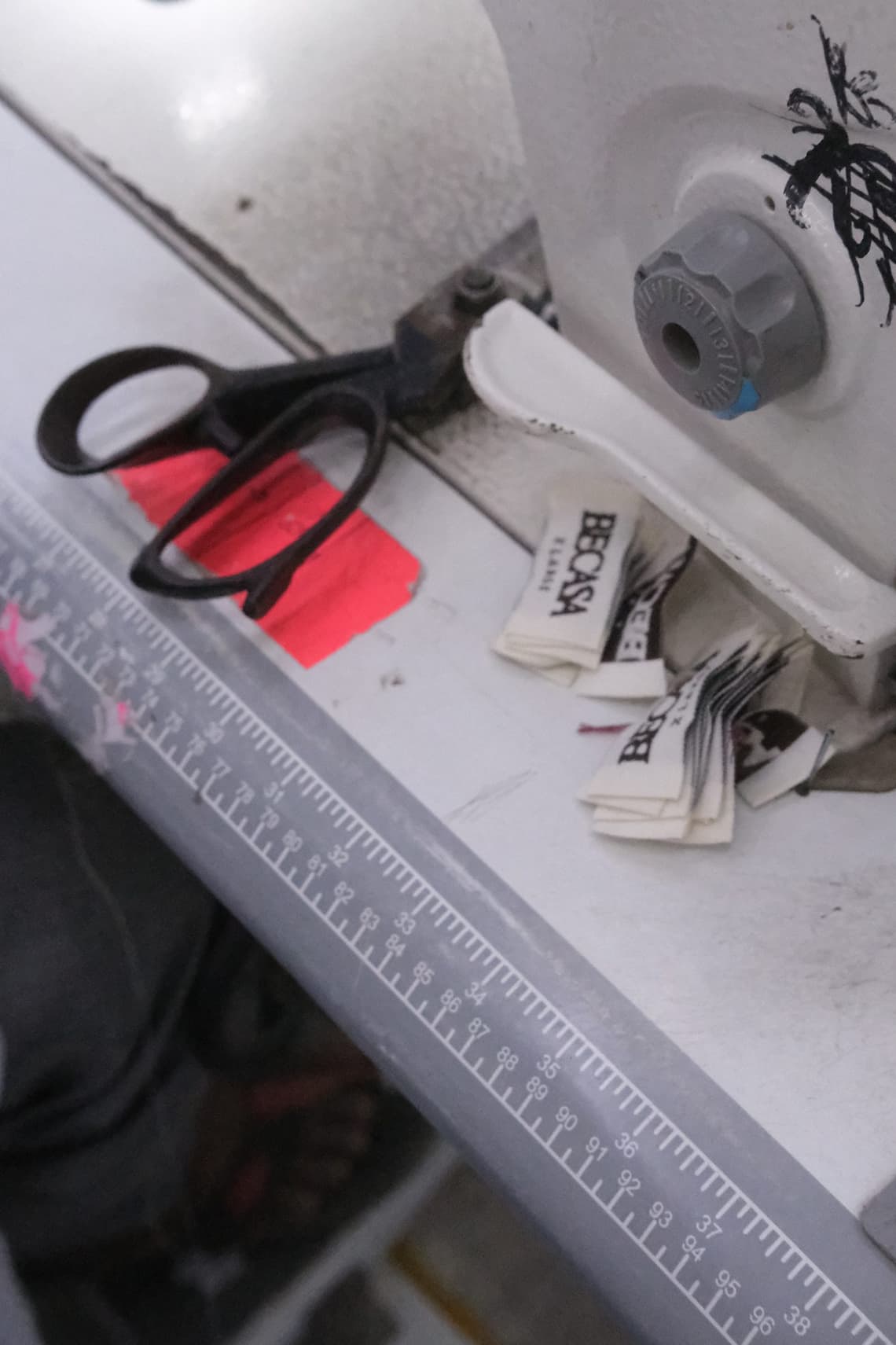
It reminds me of growing up in the South, where there’s a shared cultural language. Hushpuppies, the boat ramp on Saturday, talking to neighbors at the edge of the yard, alligator raindrops. Nobody has to explain it. It’s just part of a place. That’s what making feels like in India. There’s life in it.
And that makes you want to play. Have you ever seen a block print that didn’t look like a block print? I’ll show you. I love old techniques and knowing there are hands and history behind something, but I don’t necessarily want to use them to make the same thing that’s already been made a thousand times. I want to know, what else can you do? What if we change the scale, use our colors or move it somewhere unexpected? What happens when we take something very old and use it to make something that feels completely like us? Try it. Wash it. Dye it. Print it. Cut it differently. Put two things together and see what happens. Nothing too precious.
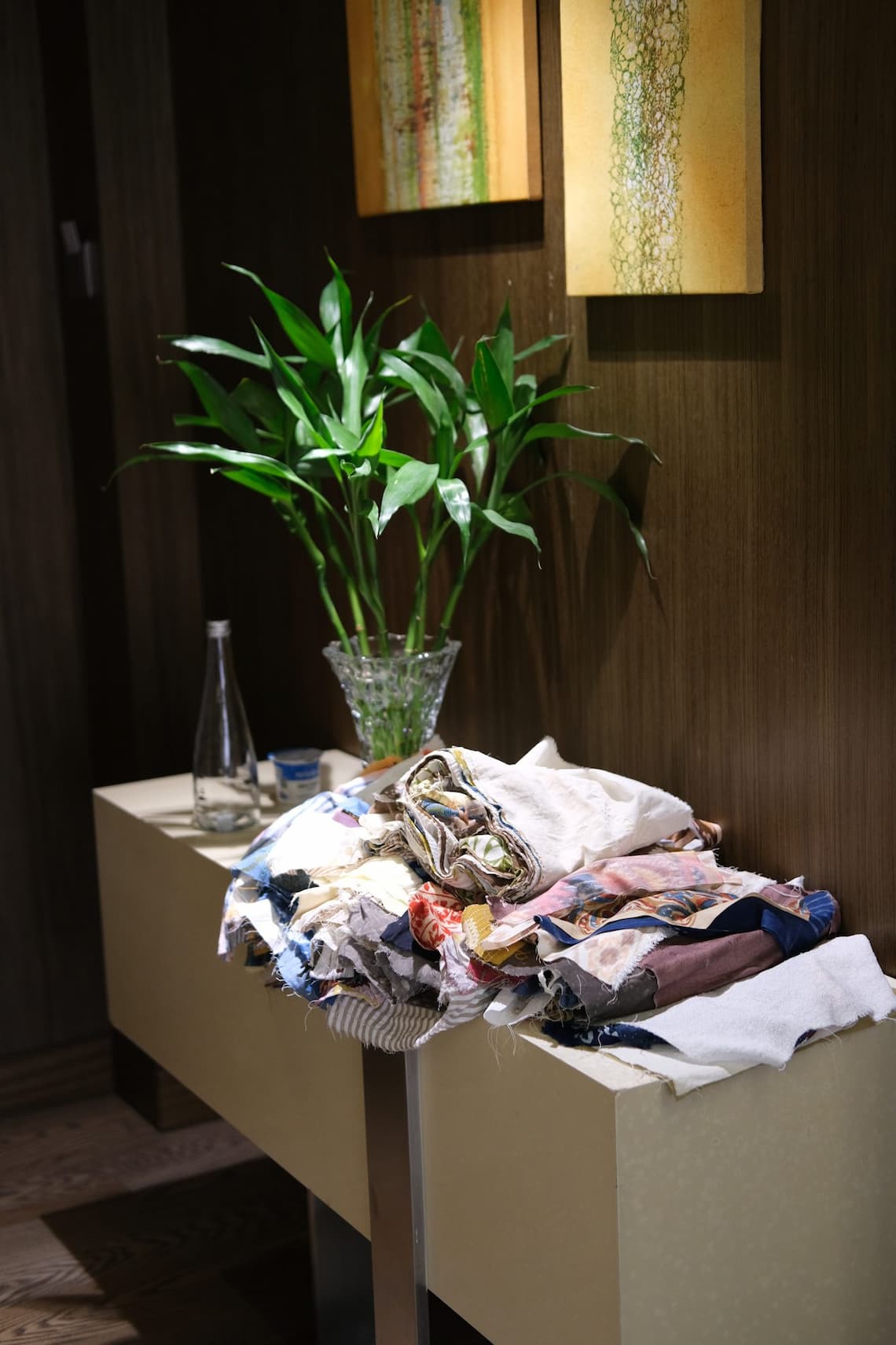
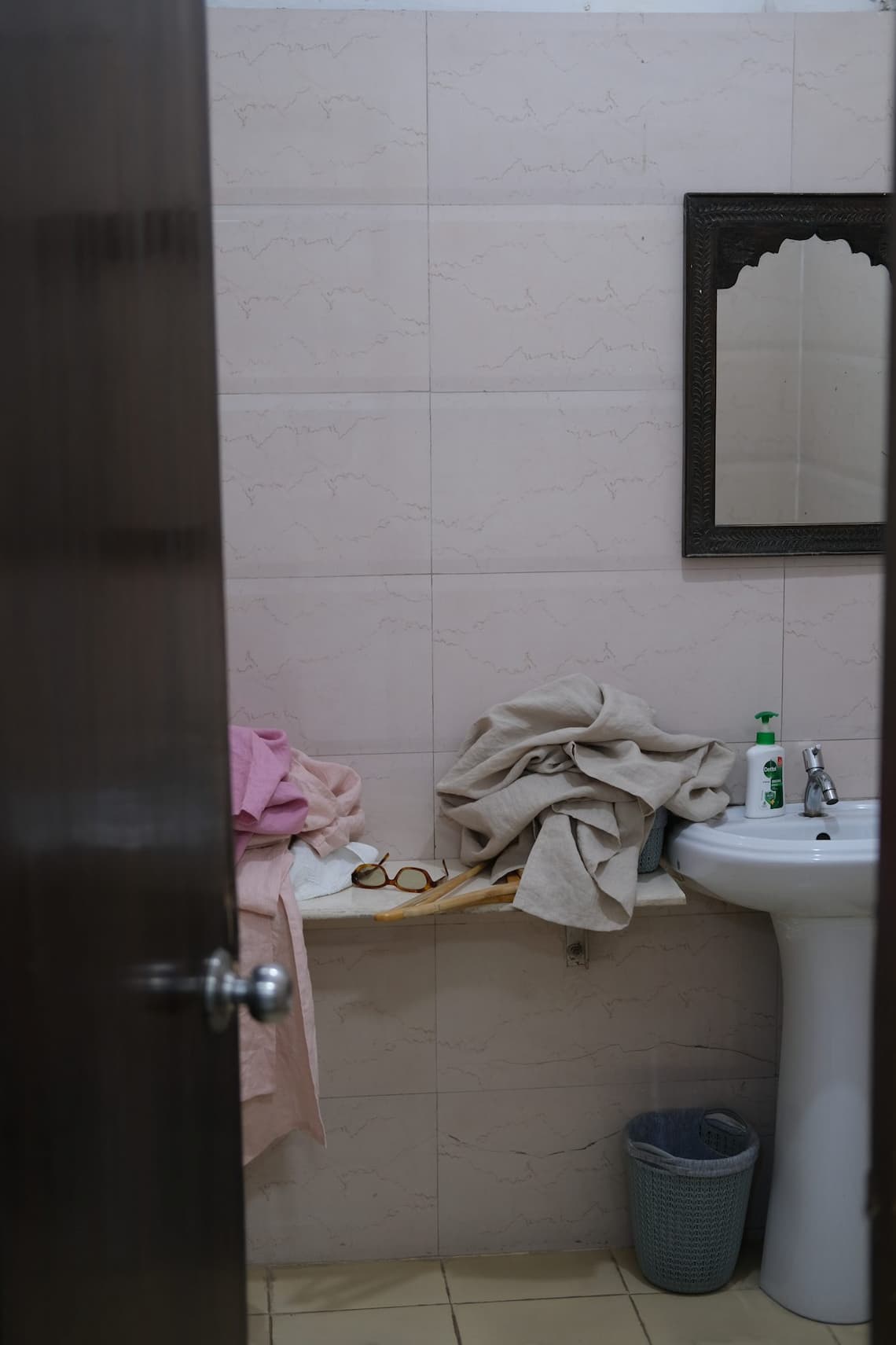
And then there’s the cloth. I love clothes, obviously, but I might love cloth even more. Linen in different weights, cotton wovens, voile, poplin, chambray, twill, cotton silk. All those tiny differences in weight and weave and wash that completely change what something becomes. Before there’s a shirt, there’s the cloth. How does it feel? What happens when you wash it? Does it soften? Does it wrinkle in a good way? Is it going to feel good when it’s 95 degrees outside? Will you pull it out of your closet over and over again?
That matters to me. We make clothes for real life. For heat and home and the beach, for going somewhere and going nowhere. I want you to wear the hell out of them.
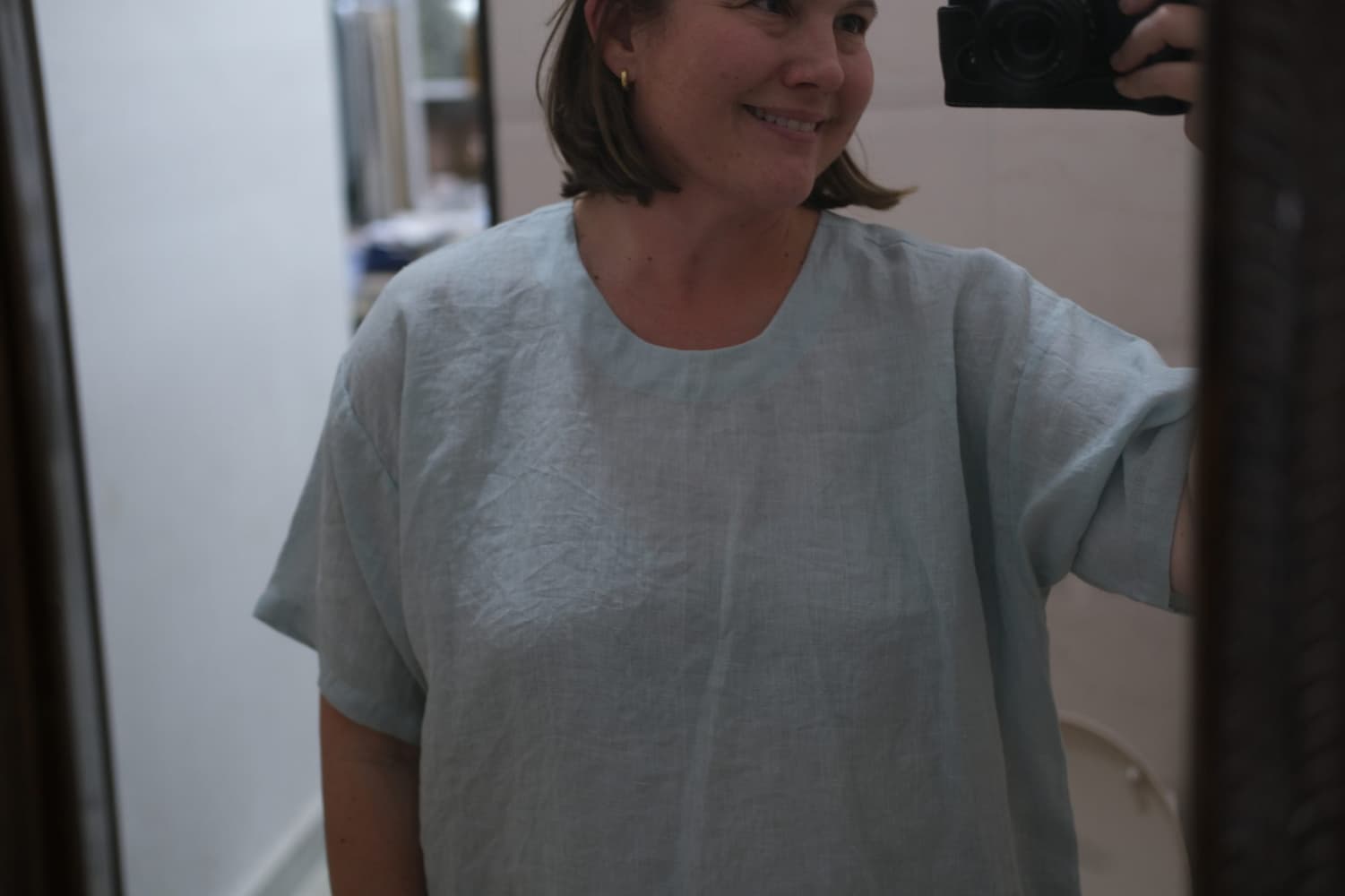
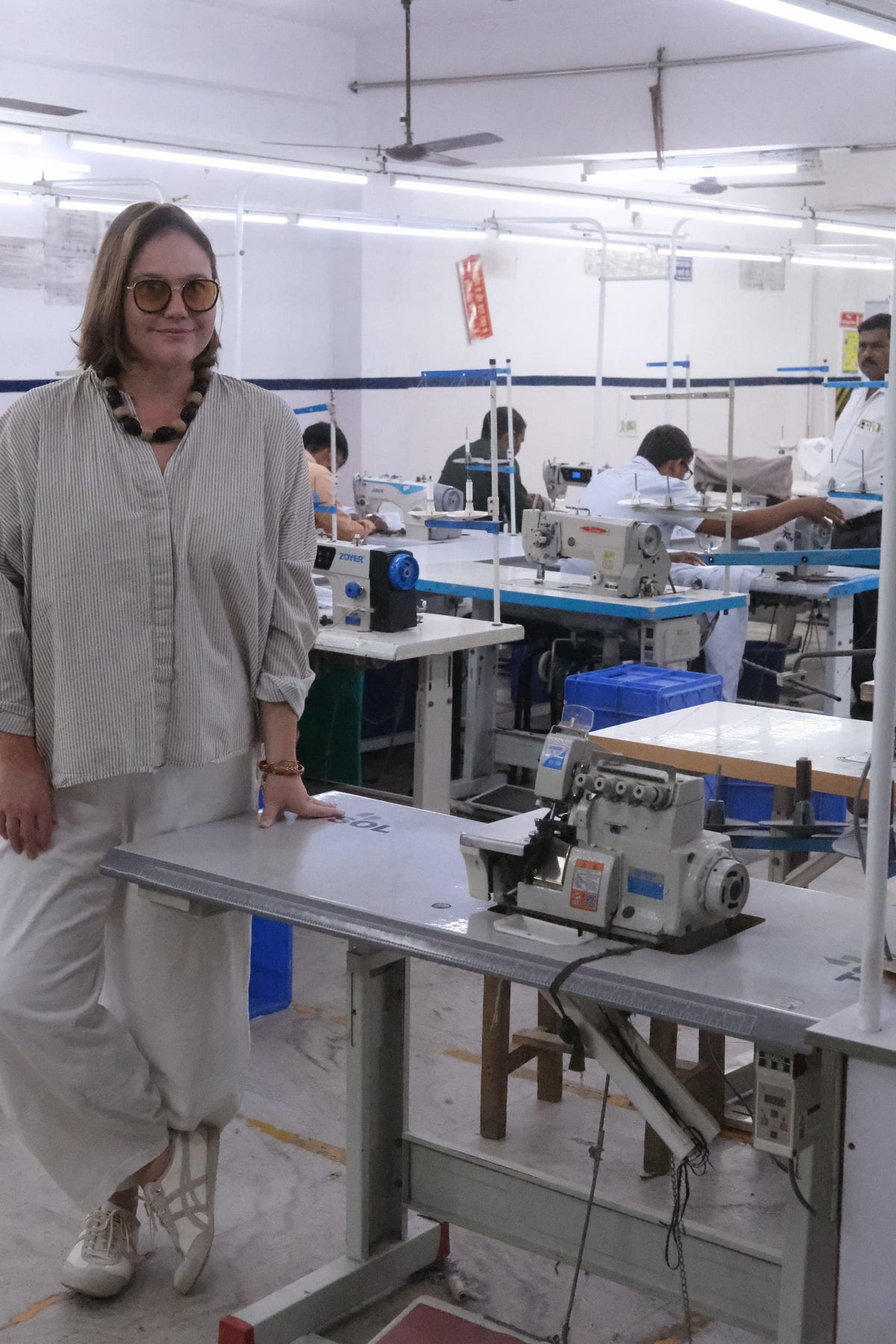
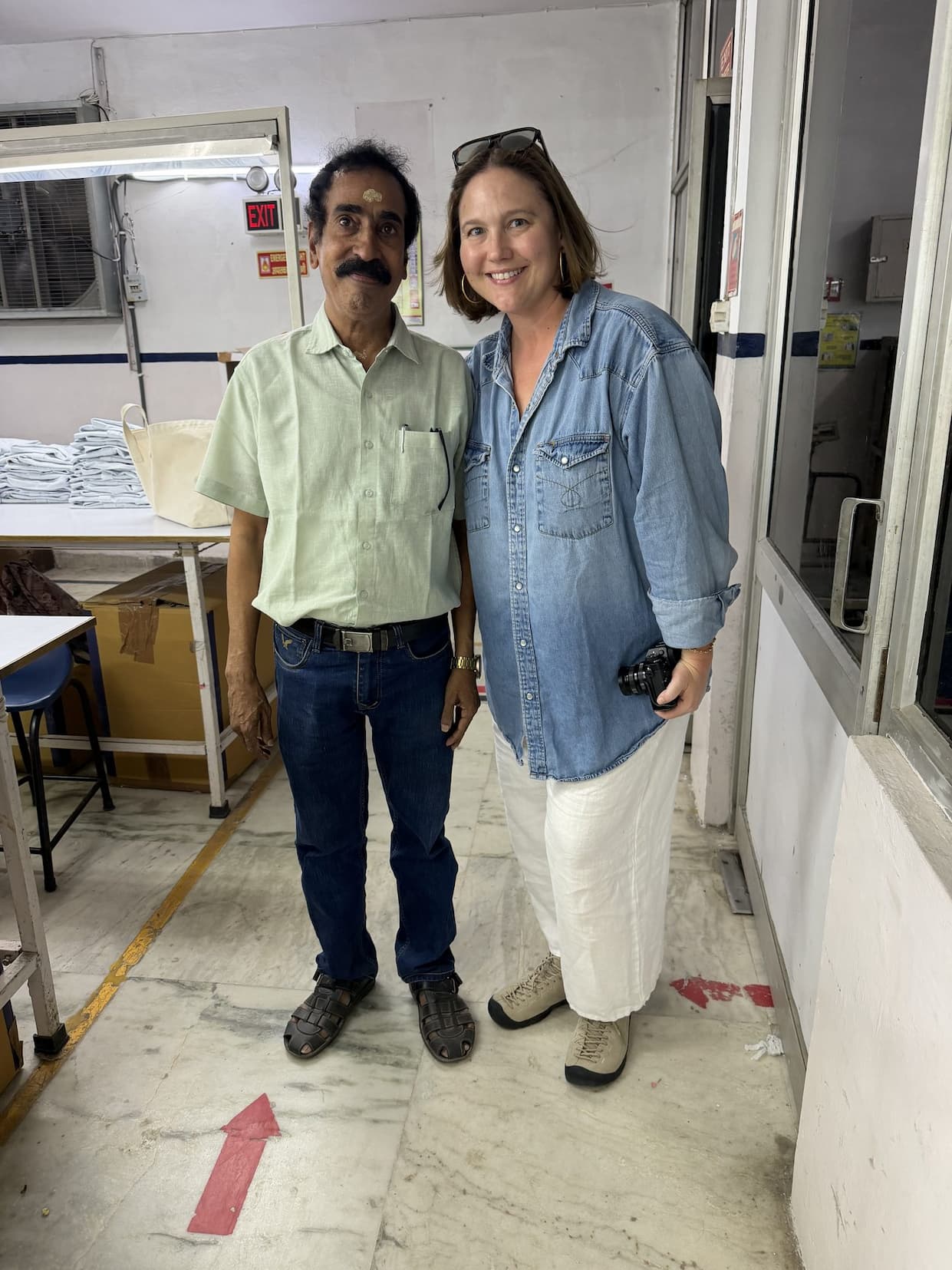
Our manufacturer, Vikram, understands that. He took a chance on BECASA years ago and we’ve been making together ever since. He believes small brands can do just about anything, and I love that about him. We’ll show him something, ask a question, pull out a fabric, change our minds and come back the next day with another idea. He gets it. And he loves natural fibers like we do. Linen, cotton, voile, poplin, chambray, wovens, twill. Yes, yes, yes. No synthetics. Ever.
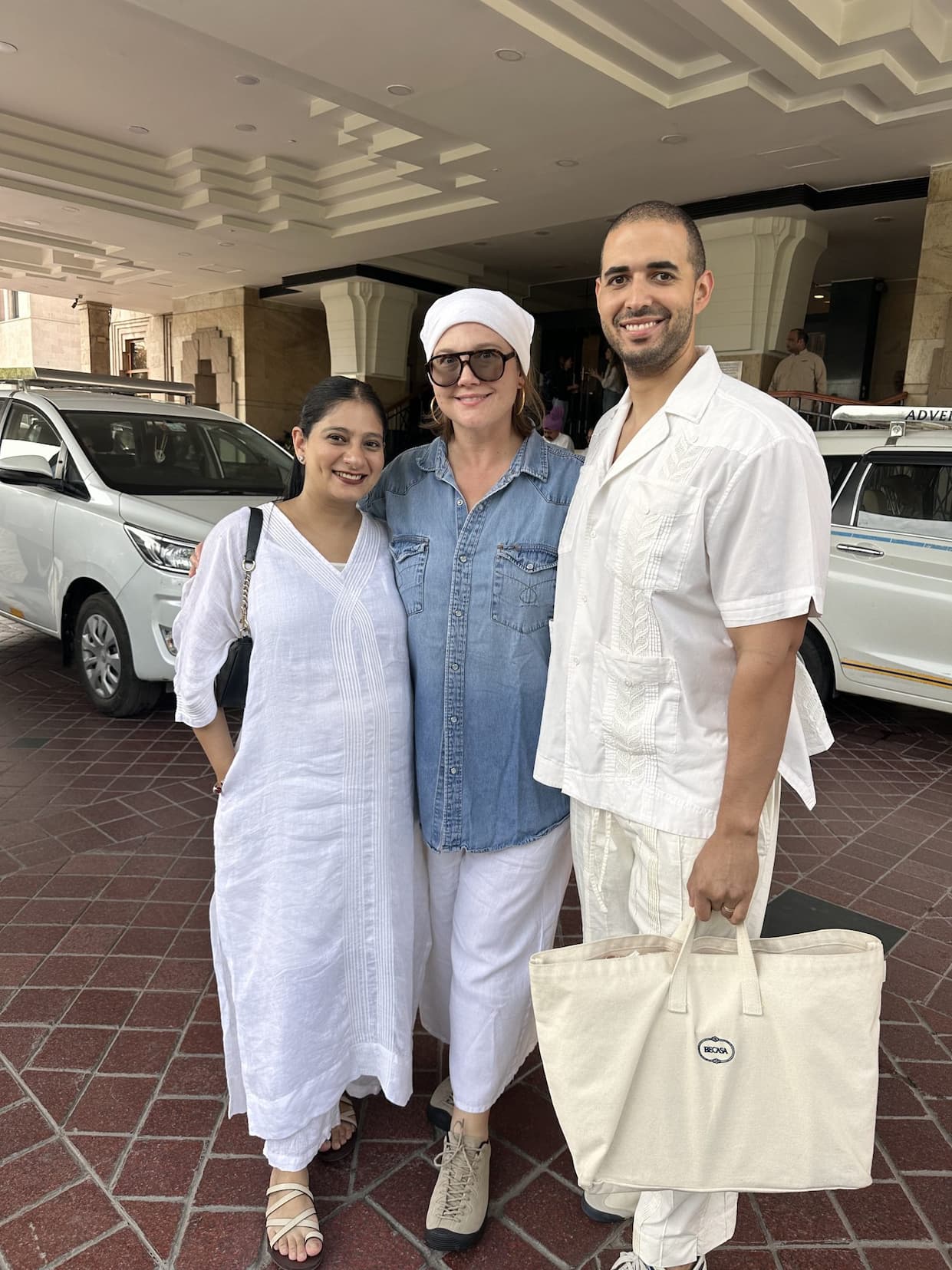
Our agency team is right there in the middle of it too, keeping a thousand details moving between our ideas and the finished thing. There are so many people and so many hands involved in making one BECASA piece. Being there and seeing all of them at work makes you appreciate that all over again.
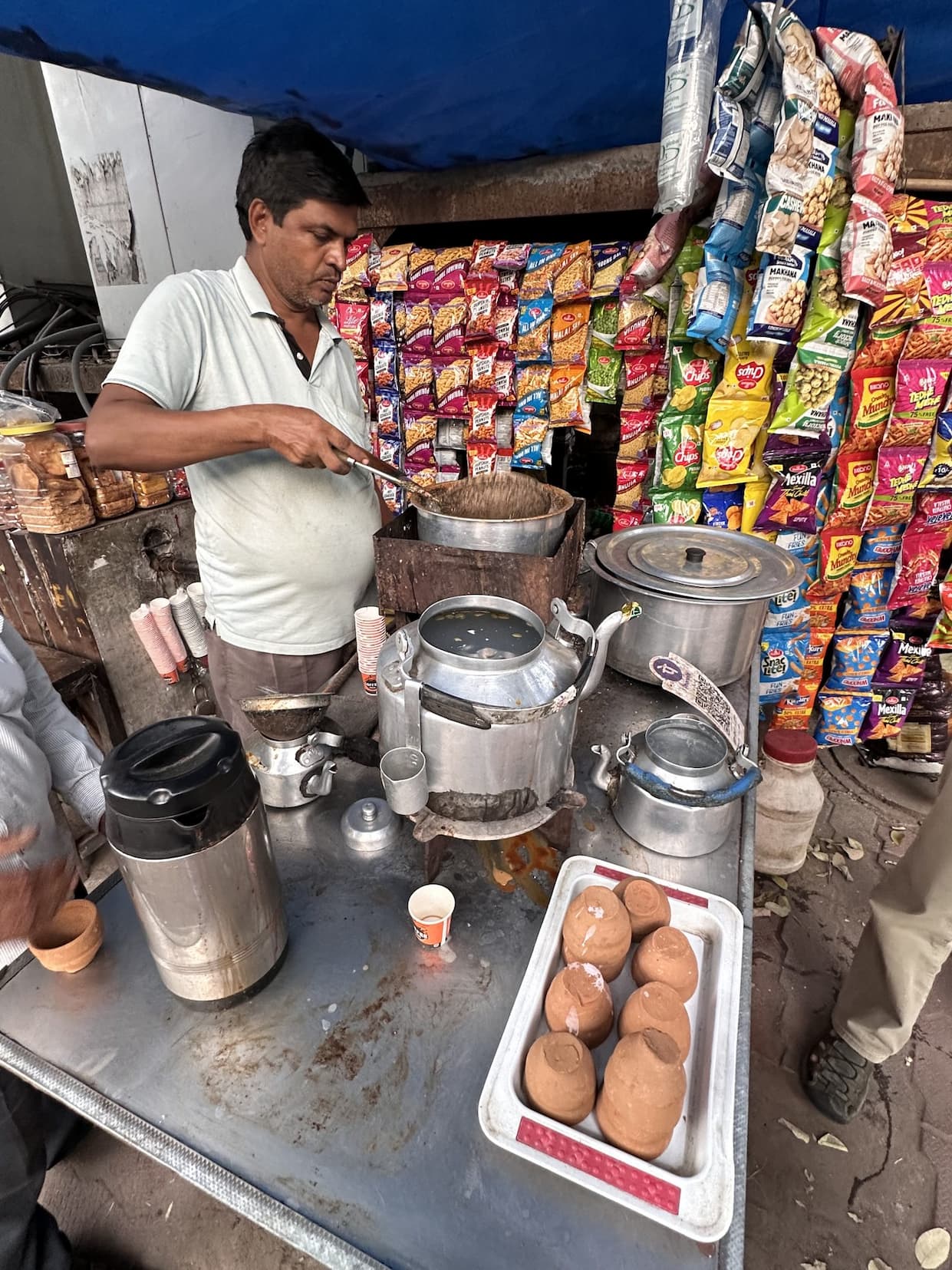
And the paintbrushes go beyond clothes. This trip we looked at kauna grass mats, little terracotta cups made for masala chai, lightweight canvas for the table, new natural fabrications and more of the hammered gold jewelry you already love. Useful, beautiful things. Things to wear, use and live with. Nothing too precious.
Somehow, traveling very far to design only makes home dearer. I could be standing in a fabric market in Delhi looking at a thousand colors and still find myself pulling out the ones that remind me of home. Sand, sea, indigo, tobacco, those strange coastal greens, old boats, work clothes, things faded by the sun. Home comes with you.
We don’t go to India to make BECASA look like India. We go because it gives us more ways to make BECASA look like BECASA.
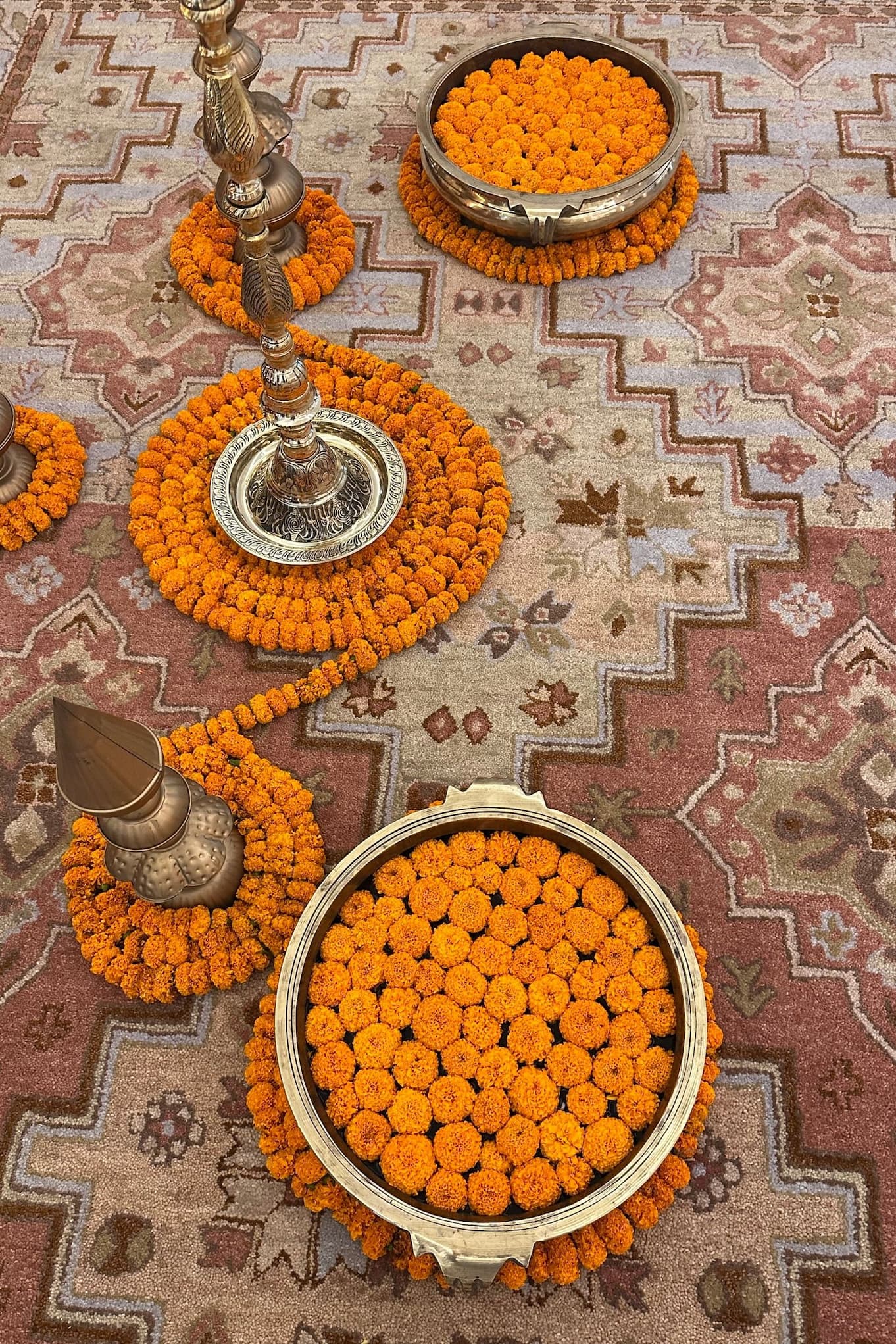
And then there’s India itself. I kept saying while we were there that it feels like the biggest small town in the world. Millions of people, cows, motorcycles, tuk-tuks, marigolds, fabric piled everywhere, tea showing up in the middle of a meeting. Somebody always seems to know somebody who knows the person who can make the thing you’re looking for. It’s loud and colorful and chaotic and wonderful. There’s life in it.
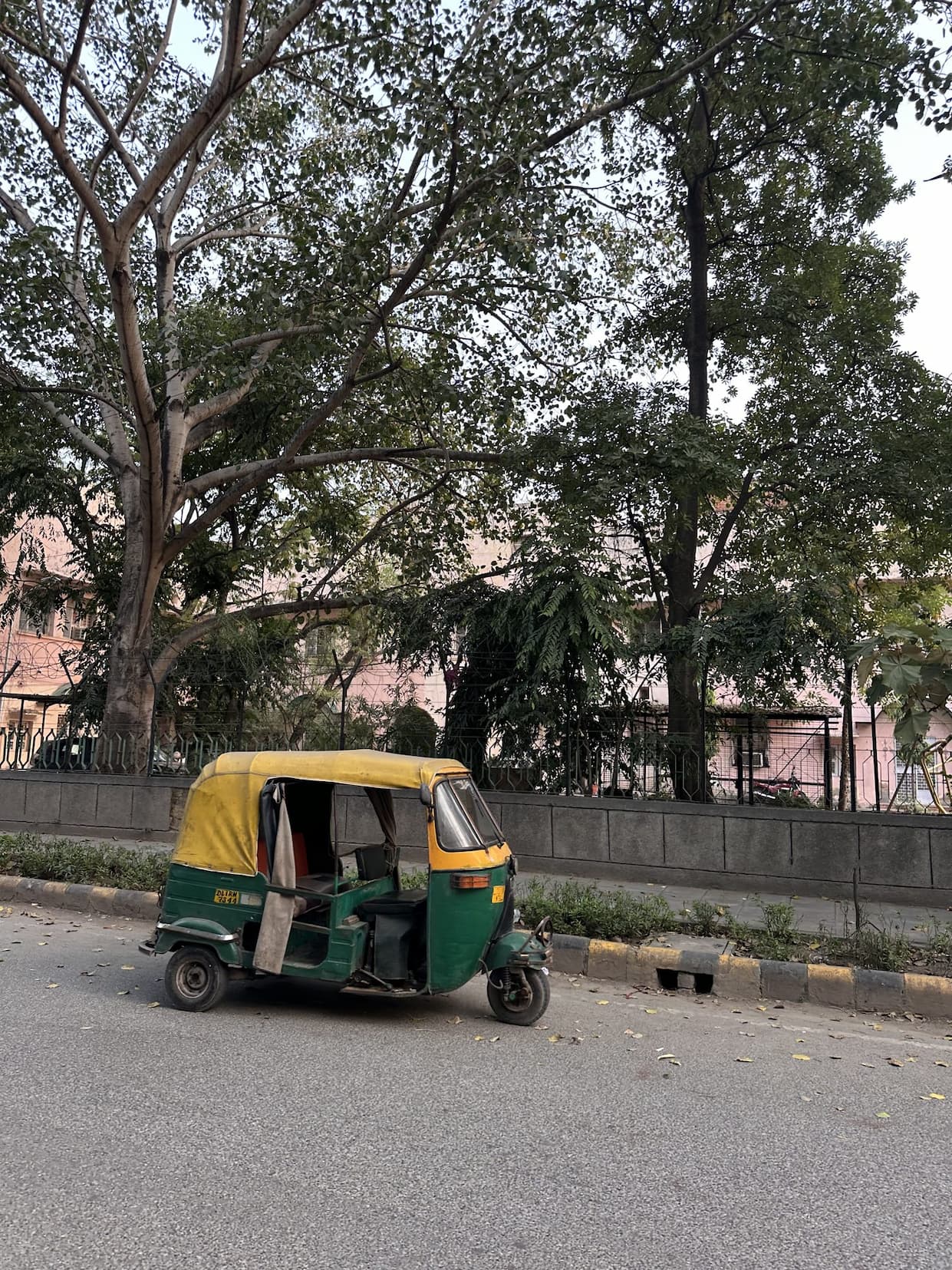
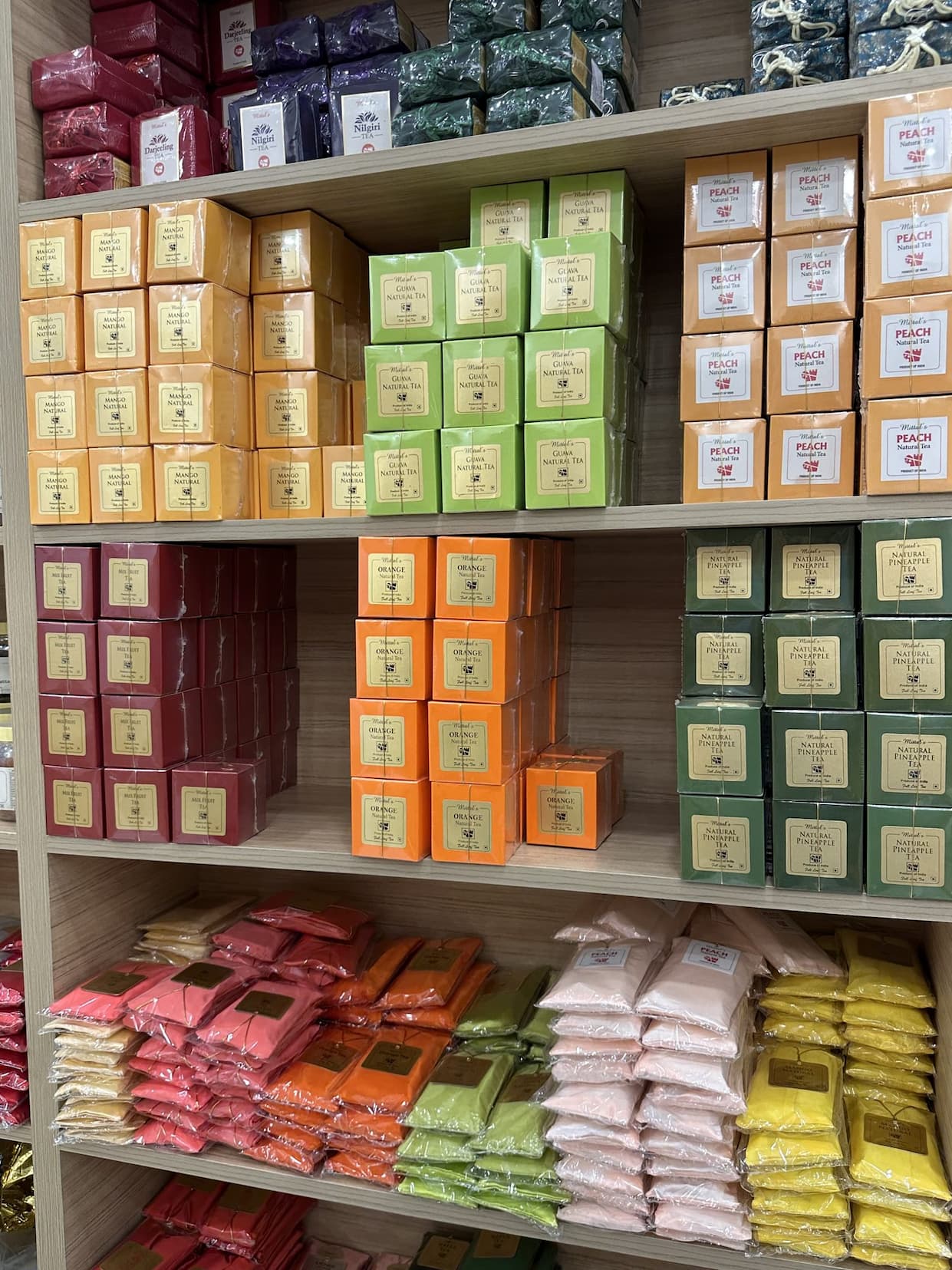
We’ve been home a week and my head is still full. So is my notebook. There are fabrics I can’t stop thinking about, things we tried that worked, things that didn’t, things I saw and immediately knew belonged in our world, and about a hundred little ideas I want to chase down.
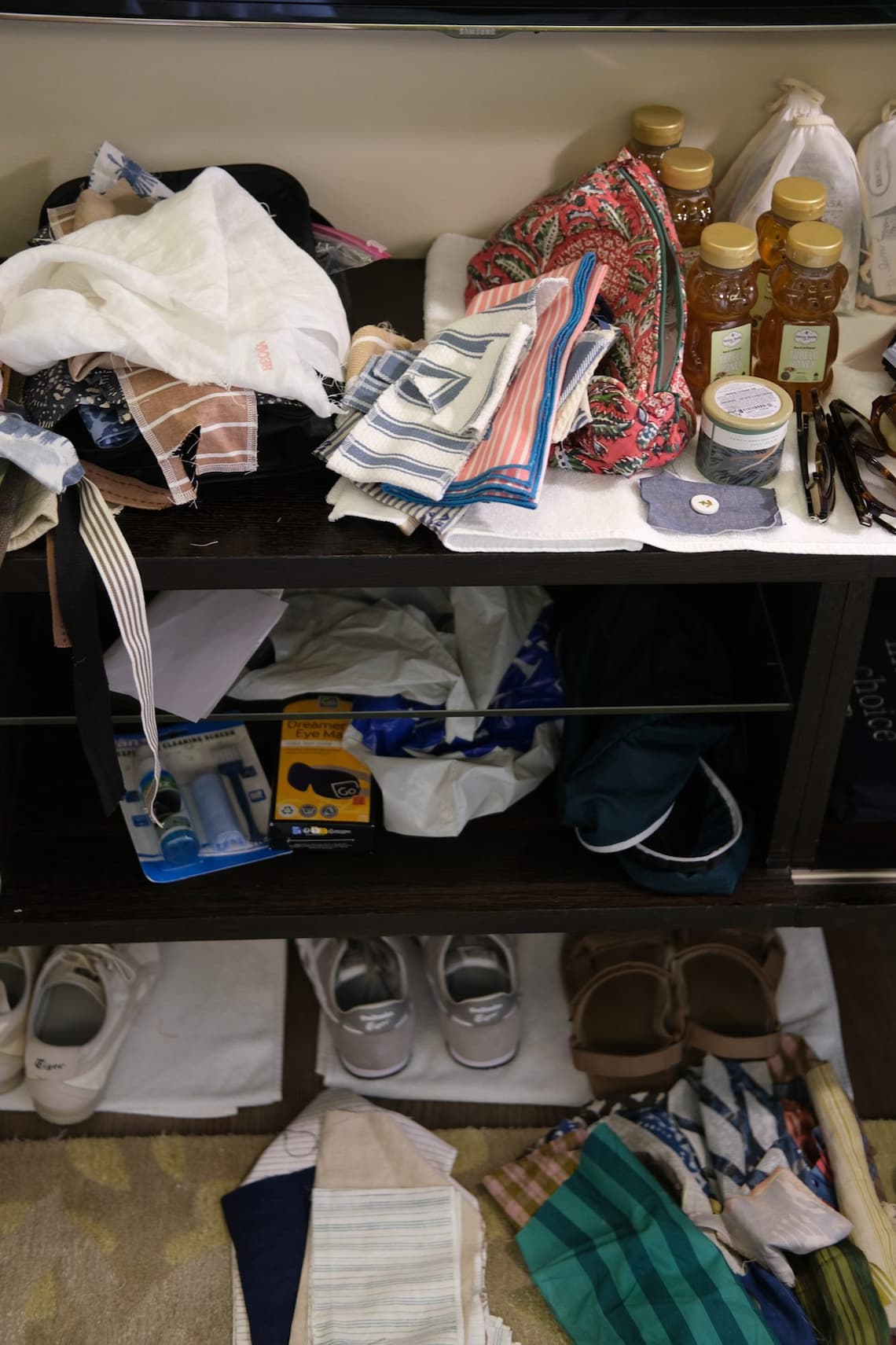
And almost perfectly, just as we arrived home, we got word that our newest shipment of kantha quilts had arrived at the Port of New York too, after nearly two months at sea. I loved that. We were unpacking our suitcases while this beautiful pile of old cloth and hand stitching was making its own way to us. They’ll be in the shops this fall, and I can’t wait to keep sharing the tradition of kantha with you.
BECASA is still BECASA. Maybe more than ever. We know where we come from. We know what we like. We know what we don’t. But give me the paintbrushes, the colors and the canvas. I want to see what else we can make.
A very specific point of view, with a whole lot of paintbrushes.
Emily
P.S. We’re keeping India close to home this week with a dinner for our BECASA team, prepared by our neighbor Delhi Melly. She spent five years living in Delhi and came home to the Panhandle still thinking about the food, so this feels especially perfect. Butter chicken and naan, dal, pani puri, a proper gin gimlet and a masala Paloma are on the menu. A little celebration of our team here, our team there and a partnership we’re very grateful for.